Financial services in Montreal
Before you act on anything about tax on this page
This practice is licensed in life and health insurance. It is not an accounting practice, it does not prepare returns, and nothing on this page is tax advice or an opinion on anybody’s tax position.
- Speak to an accountant before you act. Not after. If tax is any part of the reason a decision is being considered, a professional accountant who has seen the actual file is the person to decide it with, and this page is not a substitute for that conversation.
- The rules move. Tax rules, thresholds, rates, forms and deadlines change, most of them at least once a year, and a rule described here may have been amended since this page was built.
- The tax authority is the authority. For anything a reader intends to rely on, the Canada Revenue Agency and, in Quebec, Revenu Quebec publish the current rule themselves, free, and that is where it should be read.
- Nothing here is a calculation of anybody’s tax. This page describes how a rule is written. It does not work out what any reader will pay, recover or owe, because that depends on a whole return and on facts no page can see.
- No professional relationship is created by reading this. No reliance should be placed on it, and nothing in it is legal advice either.
In plain language: we are not accountants. Anything here that touches tax is general information, it changes, and it should be checked with an accountant and against the tax authority’s own page before anybody uses it for anything.
CWCC works with Montreal families, business owners and incorporated professionals on life insurance, living benefits, succession planning and capital strategy: entirely online, in French and in English. The firm is registered with the Autorité des marchés financiers under number 602293, and Jose Salloum has been a Financial Security Advisor licensed by the AMF since 2001. Every meeting is held online: there is nothing to travel to, and no trip to plan.
This page is general information and financial education. It is not personalized financial, insurance, investment, tax or legal advice, and reading it creates no professional-client relationship. Participating whole life insurance is an insurance product, not an investment; its primary purpose is the death benefit. Dividends are not guaranteed: they are declared annually by the insurer’s board of directors based on the performance of the participating account, and past performance does not indicate future results. Guarantees described are contractual obligations of the issuing insurer and depend on its financial strength; they are not government-backed. Insurance products are not deposits and are not insured by CDIC. Policyholder protection is provided by Assuris within its published limits. Policy loans accrue interest and reduce the death benefit and available cash value until repaid; under section 148 of the Income Tax Act a policy loan is a disposition and a taxable gain can arise where proceeds exceed the adjusted cost basis. Creditor protection varies by province and circumstance and is never absolute. Suitability can only be assessed through individual consultation. CWCC is a firm registered with the AMF (602293); its advisors earn commissions paid by insurers on products placed. CWCC is not registered with CIRO and provides no securities advice.
In plain language: this page describes what we do and how the pieces fit together. It cannot tell you what you should do, because we have not met. Dividends are not guaranteed. The insurer’s board decides, one year at a time. The guarantees come from the insurer, not the government, and a policy is not a deposit. When a client places a policy through us, the insurer pays us a commission: you should know that when you weigh anything we write. And when a question belongs to securities, we say so rather than pretend our licence stretches that far.
What makes Montreal different
Personal finance is not the same thing in Montreal as in Toronto or Calgary, and the difference is not vocabulary. It is law.
Quebec is the only Canadian province governed by the Civil Code rather than the common law. That changes four concrete things in a Montrealer’s financial life: who administers an estate, how a will is validated, what can carry a beneficiary designation, and what happens to family patrimony when a couple separates. A strategy designed under the common law and transplanted unchanged into Quebec does not simply become less efficient. It can stop working.
On top of that sits a particular economic reality. Montreal has an unusual concentration of plex owners. The two- to five-unit buildings that have been part of the streetscape for a century and which, in March 2026, were trading at a median of roughly $880,000 according to market statistics. A plex is not only a home: it is a business asset, a source of rental income, and a succession problem waiting to happen when it has to be divided among several children and only one wants to keep it.
The city also holds a heavy concentration of incorporated professionals, physicians, dentists, engineers, lawyers, consultants, and of small and mid-sized businesses in aerospace, life sciences, video games, artificial intelligence and professional services. Each of these profiles arrives with the same question in a different form: I have capital trapped somewhere, and I do not know how to put it to work without losing it to tax.
The Civil Code changes succession planning
The liquidator, not the executor
In Quebec the person who administers an estate is the liquidator. The role resembles that of an executor elsewhere in Canada, but it is framed differently: obligations to draw an inventory, to publish in the Register of Personal and Movable Real Rights, and to render an account. A liquidator who discovers the scale of the task afterwards is left with substantial administrative work at the worst moment of their life.
A notarial will avoids verification
A holograph will or a will made before witnesses must be verified by the court or by a notary before it takes effect. A notarial will in minute form is enforceable from the moment of death. That is a difference of weeks, sometimes months, in a family’s access to assets.
And the feature few people know about
In Quebec, registered accounts, RRSP, RRIF, TFSA, generally cannot carry a beneficiary designation within the plan itself, unlike the rest of Canada. Those assets normally pass through the estate. Insurance contracts can: a life insurance policy and a segregated fund contract are insurance contracts, and a beneficiary designation on them is valid. The proceeds go directly to the named person, outside the estate.
This is not a sales argument. It is a feature of Quebec law, and it explains why insurance contracts play a larger structural role in a Montreal estate plan than in an equivalent Ontario one. What it means for your situation depends on your will, your matrimonial regime and the composition of your patrimony, and belongs to a notary or a lawyer, with your accountant on the tax.
Our seven service areas, seen from Montreal
Life insurance
Term, permanent, participating whole life. The question is never “which is best” but “which does the job you actually have.” A $652,000 mortgage on a single-family home, the Montreal median in March 2026, is not protected the same way as an income plex two children will inherit.
Living benefits
Critical illness, disability, long-term care. This is the coverage that pays while you are still here, and it is the one households skip most often. The self-employed and the incorporated professional are particularly exposed: no group plan covers them by default.
Group insurance
For the employer, a hiring tool and a cost centre. For the member, coverage rarely read before it is needed, and often thinner than assumed. We work on both sides.
Wealth creation
RRSP, TFSA, FHSA, RESP: the order in which you fund them matters more than most people think, and it depends on your marginal rate today compared with the one you expect in retirement.
Investment options
Segregated funds, mutual funds, ETFs, GICs. We publish educational comparisons. Our boundary is simple: where a segregated fund contract fits, we can put it in place under our insurance licence, and in Quebec, the beneficiary designation it permits is a real advantage. For securities held through a dealer we offer education only: CWCC is not registered with CIRO.
Succession planning
Will, liquidator, designations, deemed disposition at death, and liquidity to pay the tax without selling an asset under pressure. This is where Quebec law diverges most.
Financial sovereignty
The layer that connects the other six. See the next section.
The Infinite Financial Sovereignty® strategy in Montreal
The strategy we call Infinite Financial Sovereignty® rests on the financial approach widely known as The Infinite Banking Concept®, originated by R. Nelson Nash. The central idea is simple to state and long to build: in any financing arrangement, someone supplies the capital and someone owns the structure it moves through. Most people occupy neither role.
In practice, the strategy uses a participating whole life insurance policy issued by a Canadian life insurer as the place where capital accumulates on a tax-deferred basis, and which is accessed through a policy loan rather than by applying to an outside lender.
Three clarifications, because they matter more than enthusiasm: a policy loan is a genuine loan issued by the insurer, it accrues interest, and it reduces the death benefit for as long as it is outstanding. Dividends are never guaranteed. And this is not a bank: a policy is an insurance contract governed by provincial insurance legislation, it is not a deposit account, and protection comes from Assuris rather than CDIC.
Why does this approach interest Montreal particularly? Because the city is full of people whose capital is locked inside something, a corporation’s cash, the equity in a plex, a small business’s retained earnings, while they finance the rest of their lives through outside lenders. The book Infinite Financial Sovereignty®, Simplified explains the full mechanics, including an entire chapter devoted to the situations where the strategy does not fit.
It asks for a long horizon, stable cash flow and discipline. It is not suitable for everyone, and we will tell you so plainly at the Discovery Meeting.
The business owner and the incorporated professional
This is the Montreal profile we see most often, and the one where mistakes cost the most. A physician, a dentist, a consulting engineer or a small-business owner accumulates cash inside a corporation because taking it out as dividends costs tax immediately. The instinct is to leave it sitting in a business account or in investments held by the corporation.
Two problems then appear. The first is passive income: beyond a certain threshold, investment income earned inside a Canadian-controlled private corporation reduces access to the small business deduction, which is to say, money that sits still ends up costing real money on operating income. The second is what happens at death: the deemed disposition of the shares can trigger a substantial capital gain, payable by an estate that does not necessarily hold the liquidity to settle it.
This is where the Capital Dividend Account becomes interesting. Where a corporation owns and is beneficiary of a life insurance policy, the death benefit received generally credits the CDA by the excess of the proceeds over the policy’s adjusted cost basis, and that balance can then be paid to shareholders as a capital dividend, generally received free of tax, subject to the rules in force.
We do not present this as a trick. It is a mechanism provided for in the Income Tax Act, it depends entirely on how the policy is owned, and it requires three people working together: your accountant, your lawyer or notary, and us. A policy held by the wrong entity can defeat the intended effect or create a taxable benefit. This is not a decision to be made from a web page.
The shareholders’ agreement
A Montreal business with two or three shareholders almost always has an agreement providing for the purchase of a deceased partner’s shares. The question few ask: with what money? A buy-sell clause without funding is an intention, not a plan. Key person insurance and cross-shareholder insurance exist precisely to turn that intention into liquidity available on the day it is needed.
The plex: the Montreal asset
There are few North American cities where a middle-class family routinely owns an income property. Montreal is one. The duplex, triplex and quadruplex have been part of the urban fabric for a century, and according to market statistics the median plex price reached roughly $880,000 in March 2026, up about 6 per cent over twelve months.
A plex creates three simultaneous financial questions that most owners never address together.
The income. If the owner dies or becomes disabled, the building still demands a mortgage, taxes, maintenance and management. Rental income does not manage itself, and a surviving spouse who has never kept the books inherits a job as much as an asset.
The tax. A plex held for 25 years carries a latent capital gain that is often substantial. At death, deemed disposition makes that gain taxable even though nobody sells. The estate has to find the money: either it has it, or it sells the building, sometimes quickly, rarely at the best price.
The division. A building does not divide into three. When three children inherit and only one wants to keep it, the solution runs through liquidity that lets the shares be balanced without forcing a sale. That is exactly the problem estate equalization through life insurance was designed to solve.
The appropriate structure depends on title, matrimonial regime, the will and the tax position, and belongs to your notary and your accountant as much as to us.
Newcomers
Montreal receives a significant share of Quebec’s immigration each year, and the city is linguistically more varied than its reputation suggests: French leads, English follows, and Arabic, Spanish, Italian, Greek, Armenian and Creole are widely spoken across several neighbourhoods.
A newcomer’s financial questions are predictable and rarely well answered: what protection do I actually have through my employer, and what happens if I change jobs? Can I insure a parent who stayed abroad? Is a will made elsewhere worth anything here? What happens to my foreign assets at death?
We do not pretend to answer all of these: several belong to private international law and to a lawyer. What we can do is explain clearly what a group plan covers and where it stops, and say plainly when a question goes beyond our competence.
Pre-retirement and drawdown
At fifty-five or sixty the question changes in nature. It is no longer “how do I accumulate” but “in what order do I withdraw, and what will be left.”
Three elements collide. First the withdrawal sequence: RRSP, RRIF, TFSA and non-registered accounts are not taxed the same way, and the order chosen changes the total tax paid over 25 years. Then the Old Age Security recovery, which penalises higher incomes. Finally the tax at death: a RRIF not rolled to a spouse becomes fully taxable in the year of death, which can be the largest tax bill of a lifetime.
Insurance does not settle these questions on its own. It can, however, supply the liquidity that spares an estate from selling at the wrong moment, and a beneficiary designation that keeps the proceeds outside the estate, which, in Quebec, carries particular value given what was said above about registered accounts.
The cornerstone guide
Start here: the whole strategy in one page
What it is, how it works in Canada, what it costs, what it risks, how long it takes and who it does not suit.
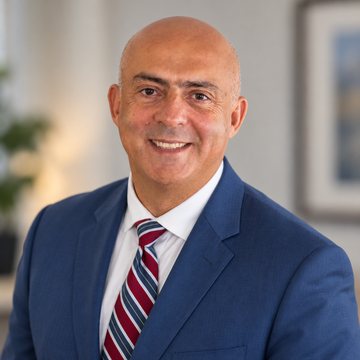
Jose Salloum Canadian Wealth Creation Centre Inc.
Read the guideHow this approach compares
An honest comparison does not declare a winner. It places the characteristics side by side and lets the reader judge what fits.
| Element | Conventional approach | Coordinated IFS™ approach |
|---|---|---|
| Where long-term capital sits | Registered accounts and non-registered investments | The same, plus a participating insurance contract serving as the foundation |
| Access to capital | Taxable withdrawal, or an application to an outside lender | A policy loan issued by the insurer, accruing interest, without an outside credit application |
| Growth | Market-dependent; not guaranteed | Contractual guaranteed values, plus dividends that are not guaranteed |
| At death (Quebec) | Registered accounts generally through the estate | Insurance contracts: beneficiary designation available, proceeds outside the estate |
| Horizon required | Variable | Long: cash value is generally lower than premiums paid in the early years |
| Protection on insolvency | CDIC on deposits; CIPF on certain brokerage accounts | Assuris, within its published limits |
This table does not claim one column is superior to the other. A participating policy is an insurance contract; comparing it to the market as though it were a fund would be a category error. For the highest expected return on a dollar, other vehicles suit better, and we will say so.
What a first meeting covers
Thirty minutes, online, no products and no obligation. Here is what actually happens.
Your situation
Income, debt, ownership structure, dependants, existing protection, including what your group plan covers, which most people have never read.
What is missing
The real gaps, ranked by importance. Often the answer is an emergency fund or enough term insurance, not a capital strategy.
An honest answer
If what we do does not match what you need, you will hear it at the end of the meeting. No proposal follows a Discovery Meeting: it is a conversation, not a sales step.
Who this is for in Montreal
- Plex owners. Rental income, a latent capital gain, and an asset that is hard to divide fairly among heirs.
- Incorporated professionals. Physicians, dentists, engineers, consultants: cash in the corporation, passive income taxation, the Capital Dividend Account.
- Small business owners. Shareholders’ agreements, key person insurance, succession.
- Families with children. Protection, RESP, and the foundation of intergenerational wealth.
- Newcomers. A significant share of Montreal’s population, often with group coverage never read and no succession planning under the Civil Code.
- Those approaching retirement. Drawdown, tax at death, and the question of what will remain for the family after the tax authorities.
And who it is not for: if you have no emergency fund, if you carry high-interest debt, or if your cash flow is uncertain, those things come first. We will say so.
How a meeting works
All of our meetings are held online. The firm’s office is in Laval, but nothing obliges you to go there: the thirty-minute Discovery Meeting takes place by video, wherever you are in Montreal or elsewhere in Quebec.
No product is presented at that meeting. We listen, we ask questions, and at the end we tell you honestly whether what we do matches what you need. If the answer is no, you will hear it.
Check us out independently
No form in this section, nothing to book. Before trusting anyone with money the right instinct is to verify, and nothing here should discourage it.
The AMF register
Canadian Wealth Creation Centre Inc. is registered as a firm with the Autorité des marchés financiers under number 602293. Both a firm’s registration and an advisor’s certificate can be confirmed in the AMF’s public register.
The full profile
Licensing, designations and issuing bodies, with how to confirm each one. About Jose Salloum.
Or check for yourself
The Google links open a Google Canada search in a new tab. What appears there is Google’s ranking, not a recommendation from this site.
Frequently asked questions. Montreal
Do I have to travel to Laval to meet you?
No. All meetings are held online by video. The firm has an office in Laval, but no client needs to go there to be served.
Why is succession planning different in Quebec?
Because Quebec is governed by the Civil Code. The person administering the estate is the liquidator; a notarial will in minute form avoids verification; and registered accounts generally cannot carry a beneficiary designation, while insurance contracts can. What applies to your situation belongs to a notary or a lawyer.
I own a plex. What makes that particular?
A plex combines three realities: a home, a rental business and an asset carrying a large latent capital gain. At death, deemed disposition can trigger substantial tax, and the asset divides badly among several heirs when only one wishes to keep it. It is a situation where liquidity matters as much as value.
Is an insurance policy a bank?
No. A participating whole life insurance policy is an insurance contract governed by provincial insurance legislation. It is not a bank, does not carry on banking, is not a deposit account and is not insured by CDIC. Policyholder protection comes from Assuris, within its published limits.
Do you provide investment advice?
We can put segregated fund contracts in place, which are insurance contracts covered by our licence. For mutual funds, ETFs and stocks held through a dealer we offer education only: CWCC is not registered with CIRO and provides no securities advice.
How are you paid?
Through commissions paid by insurers on products placed, once a policy is in force. Consulting fees may apply for ongoing advisory work. Full disclosure appears on the Transparency and Compensation page.
A thirty-minute discovery meeting
A first conversation establishes whether this fits. No illustration is prepared and nothing is arranged.
Often the answer is no, and you will hear it during the call rather than in a proposal afterwards.
The form is on the discovery meeting page and takes a minute. It arranges a conversation. It is not advice, and nothing is being sold here.
Sources and references
- THE AMF REGISTERFirm 602293, Autorité des marchés financiers, lautorite.qc.ca
Listen to this page
Read aloud by your own browser. Nothing is sent anywhere.
About the author
Jose Salloum is a Financial Security Advisor (Conseiller en sécurité financière) licensed by the Autorité des marchés financiers in Quebec, by the Financial Services Regulatory Authority of Ontario, and by the Insurance Council of British Columbia. Licensed since 2001, he works with Canadian families, business owners and incorporated professionals.
He is the founder of Canadian Wealth Creation Centre Inc. (CWCC), registered with the AMF, and of its educational branch IBCFinancial.com. He holds the Infinite Banking Concepts® Authorized Practitioner certification from the Nelson Nash Institute, a private certification rather than a regulatory licence.
CWCC is not registered with CIRO and does not provide securities advice. This page is general education and not advice on any individual file.
Important disclosures
This page is education, not advice. The content is general information prepared by Canadian Wealth Creation Centre Inc. It does not take your circumstances into account and is not a recommendation to buy, hold or cancel any contract. CWCC is not registered with CIRO and does not provide securities advice. The firm places insurance in Quebec, Ontario, Alberta, British Columbia, Manitoba and New Brunswick; clients elsewhere are served by advisors licensed in their province.
Nothing here was written with your file in front of us. Read it to understand the subject, then judge it against your own situation, ideally with someone who is licensed where you live and who has seen your numbers.
This is not tax advice, and the tax treatment depends on your own circumstances. The tax treatment described depends on the contract remaining exempt under the Income Tax Regulations and on the reader’s individual circumstances. A withdrawal, a surrender or a policy loan may be a disposition under the Income Tax Act, and amounts above the adjusted cost basis may be taxable in the year they occur. Tax rules change. Canadian Wealth Creation Centre Inc. is licensed in life and health insurance. It is not an accounting practice, it does not prepare returns, and nothing on this site is tax advice or an opinion on any reader’s tax position. Anything a reader intends to rely on should be confirmed with a professional accountant and against the current published rule of the Canada Revenue Agency and, in Quebec, Revenu Québec.
The tax result is not automatic and it is not unconditional. It rests on the contract staying within the Canadian rules and on your own situation. Before you rely on any of it, talk to an accountant who has actually worked with these contracts.
Guarantees come from the insurer, not from the government. Guaranteed values in a life insurance contract are contractual promises of the issuing insurer and depend on that insurer’s financial strength and claims paying ability. Dividends on a participating contract are not guaranteed, are declared at the insurer’s discretion and can change. Policyholder protection in Canada is provided by Assuris within its published limits; deposit insurance does not apply to insurance contracts.
The guarantees written into a contract are real, and they are the insurer’s. The dividend is not a guarantee at all; it is what the insurer decides to declare each year. Know which numbers are which before you make a plan around them.
Illustrations and projections are not predictions. Any figures, examples or illustrated values are hypothetical, are shown to explain a mechanism, and are not a forecast of the performance of any contract. Actual values will differ and may be lower than those shown. Past dividend scales do not predict future scales.
An example is there to show how the parts move, not to tell you what you will get. Any real illustration you are shown should be read on its guaranteed columns first.
Borrowing against a contract carries its own risks. A policy loan or a loan secured by a contract accrues interest. If the balance and interest are not managed, the death benefit is reduced, and a contract that lapses with a loan outstanding can produce a taxable gain in that year. Third party lenders set their own terms and can change them.
A loan is a loan. Interest builds whether or not you pay it, and a contract that runs out of room while it is owed can cost you both the coverage and a tax bill. This is the part of the strategy that needs the most discipline.
Investment discussion is general and comparative. References to investment products, accounts or returns are for comparison and education. CWCC does not sell securities and is not registered with CIRO. Segregated funds are insurance contracts; their guarantees are the insurer’s and apply only at the dates and on the terms written in the contract. Returns are not guaranteed and capital can be lost.
When this site compares a contract with an investment, it is describing how each works, not telling you which to buy. Questions about securities belong with someone registered to answer them.