Financial services in Medicine Hat
The cheapest place in Alberta to run a household is the easiest place to waste the difference. CWCC works with Medicine Hat households, business owners and retiring couples on wealth creation, insurance and capital strategy. The firm is licensed to place insurance in Alberta with the Alberta Insurance Council and matches you with an advisor licensed in the province. Every meeting is held online.
Where to start
Medicine Hat has been in the energy business for more than a hundred years and owns and operates both its gas and its electric utility. The City reports being among the most affordable Canadian cities of its size and having the lowest living wage in Alberta. That is a genuine advantage and it has a financial consequence most people here have never named. Choose the situation that looks most like yours.
What you get
Seven areas, one team, and your accountant and lawyer in the conversation when the question belongs to them.
- Wealth creation. RRSP, TFSA, FHSA and RESP, ordered around a household that has surplus rather than a shortfall.
- Capital strategy. Infinite Financial Sovereignty®, described below.
- Life insurance. Term, permanent and participating whole life, sized to obligations rather than to a sales target.
- Living benefits. Critical illness, disability and long-term care, which matter more in a city planning to age in place.
- Investment options. Segregated funds and education across the full menu available to Canadians.
- Group benefits. For your company, and a proper read of the plan you already have.
- Succession planning. Corporate shares, the Capital Dividend Account, and the plan that keeps a business in the family.
The margin is the asset, and almost nobody treats it like one
Two identical households, identical incomes, identical jobs, one in Medicine Hat and one in a larger Alberta city. The Medicine Hat household finishes each month with more left over. Everyone who lives here knows that. What follows from it is the part that goes unexamined.
A recurring monthly surplus is the single most valuable thing a household can have, more valuable than the rate of return on anything, because it is the one variable a household actually controls. A plan funded by a reliable monthly amount works. A plan funded by hoped-for growth on an amount that never quite gets contributed does not, and no product fixes that.
The difficulty is that a margin nobody has assigned a job to does not survive. It is absorbed, quietly and without a decision, by the ordinary upward drift of what a household considers normal. Five years later the surplus is gone, nothing was bought that anyone regrets, and there is nothing to show for it either.
So the first useful conversation here is not about a product. It is about naming the number and giving it somewhere to go, in an order that starts with a cash reserve, then protection sized to what the household actually owes, then registered accounts, then anything else.
The difference between a guarantee and an advantage
The Medicine Hat advantage rests on a business the municipality owns, operating in a commodity market. That is a real thing and it has been real for a very long time. It is not, however, a contract with you.
This matters because of how planning errors are actually made. Almost nobody plans by assuming something will improve. People plan by assuming today’s conditions continue, and then commit to a payment schedule that only works if they do. An advantage that is not contractual is an assumption, and an assumption inside a thirty year plan is a risk whether or not anyone wrote it down.
The correction is not pessimism, and we are not in the business of telling people their city is about to become expensive. The correction is structural. Build the plan so it survives a change in local conditions: keep a reserve, keep the committed premium at a level the household could sustain in a harder year rather than at the level it can afford in this one, and hold the protection you need regardless of what utility rates do.
That is a duller answer than most financial writing offers, and it is the answer that is still true in twenty years.
Staying here, and what that costs later
Medicine Hat reports a median age of 42.4, older than Alberta as a whole, and it is a city a great many people deliberately stay in rather than leave. Housing costs less here than the provincial average, which is one of the reasons.
Two things follow. The first is long-term care. Provincial health care covers a great deal and it does not cover everything, and the gap between what is covered and what a family actually wants for a parent is paid in cash by someone. In a household where the adult children have moved to Calgary or further, that someone is usually the parent, out of savings, at exactly the age when savings were supposed to be producing income.
The second is the estate. A household that lives modestly in a paid-off house and holds registered accounts will often leave more than it expected, and it will leave it in a form that requires the final tax return to be settled before anyone receives anything. Registered accounts are the item that surprises families most, because on the second death the remaining balance is generally brought into income in the final return, and the tax is payable in cash by an estate whose largest asset is a house.
None of that is an argument for a product. It is an argument for knowing the number, which your accountant can calculate in an afternoon, before deciding whether anything needs to be done about it.
The strategy
In almost any financing arrangement, someone supplies the capital and someone else owns the structure it moves through. Most people occupy neither role. Infinite Financial Sovereignty® is about changing which side of that you are on.
It draws on the educational approach known as The Infinite Banking Concept®, set out by R. Nelson Nash in his book Becoming Your Own Banker®. CWCC is not affiliated with, sponsored by or endorsed by Infinite Banking Concepts, LLC.
In practice: capital accumulates inside a participating whole life contract issued by a Canadian life insurer, on a tax-deferred basis, and you reach it through a policy loan from the insurer rather than by applying to an outside lender.
Why it reads differently here. This strategy is funded by a recurring premium, indefinitely, and its most common failure is a household that could afford the premium in the year it started and could not in year nine. A city with structurally lower fixed costs is unusually well suited to it for exactly that reason, and unusually exposed to the temptation of sizing the premium against the best case rather than a difficult one. The right premium here is the one you could still pay in a bad year, not the one you can pay in this one.
Three points, without exception. A policy loan is a real loan, it accrues interest, and it reduces the death benefit while it remains outstanding. Dividends are never guaranteed. And this is insurance rather than a deposit account: protection comes from Assuris, within its published limits.
The full mechanics, including an entire chapter on where the strategy does not fit, are set out in Infinite Financial Sovereignty®, Simplified.
For the business owner
The local economy is broader than its reputation. Agriculture and food processing, petrochemicals, manufacturing and an aerospace and defence sector are all present, and the City reports producing more uncrewed aerial vehicles than any other Canadian city.
The pattern in an owner-managed company repeats wherever it is found. The corporation earns more than the lifestyle requires, the surplus stays inside because taking it out costs tax immediately, and it accumulates in company-held investments.
The Capital Dividend Account enters here. Where a corporation owns and is beneficiary of a policy, the death benefit generally credits the CDA by the excess of the proceeds over the adjusted cost basis, and that balance can be paid to shareholders as a capital dividend, generally free of tax subject to the rules in force. It depends entirely on how the policy is owned, and a policy held by the wrong entity can create a taxable shareholder benefit rather than the intended effect. It requires your accountant, your lawyer and us.
Where a business has more than one shareholder, a buy-sell clause with no funding behind it is a promise that the surviving shareholder will find several hundred thousand dollars in the year the business has just lost a principal.
The cornerstone guide
Start here: the whole strategy in one page
What it is, how it works in Canada, what it costs, what it risks, how long it takes and who it does not suit.
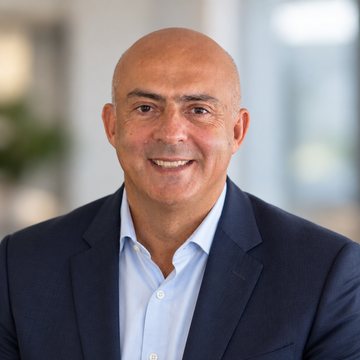
Jose Salloum Canadian Wealth Creation Centre Inc.
Read the guideWho this fits, and who it does not
It fits a household with a genuine monthly surplus and no job assigned to it, a couple intending to age in this city, a business owner with retained earnings, or a family that wants protection sized properly before anything else.
It does not fit someone looking for a short-term investment. A participating whole life contract is a long-horizon instrument and the early years are the expensive ones. It does not fit a household that would have to size the premium against its best year to make the numbers work. And it does not fit anyone hoping to be told that a strategy will outperform a market, because that is not a claim this firm makes.
The first meeting
Thirty minutes, online, no cost and no obligation. The single most useful thing to bring is an honest figure for what your household has left at the end of an ordinary month. Not the best month. Almost nobody has calculated it, and everything else on this page depends on that one number.
Not ready to talk? Start with the book.
Read the first chapter of Infinite Financial Sovereignty®, Simplified, including the chapter on where this strategy does not fit. No meeting, no obligation.
Frequently asked questions
Is CWCC licensed in Alberta?
Yes. Canadian Wealth Creation Centre Inc. is licensed to place insurance in Alberta with the Alberta Insurance Council, and matches you with an advisor licensed in the province. The firm’s registration can be confirmed in the public registers of the AIC and the AMF.
Our costs are low here. Does that change what we should do?
It changes what is possible rather than what is correct. A reliable monthly surplus is the most valuable input a plan can have, more valuable than the return on anything, because it is the variable you control. The order does not change: a cash reserve, then protection sized to what you owe, then registered accounts, then everything else.
Should we assume our utility costs will stay where they are?
Plan on the margin you have now, and size any long-term commitment so it still works if that margin narrows. The local advantage rests on a business the municipality owns in a commodity market. It has held for a long time and it is not a contract with you, and a thirty year plan should not quietly depend on it.
We want to stay in Medicine Hat as we get older. What should we look at?
Two things. The cost of care that provincial health care does not cover, which is paid in cash by someone and is usually the parent. And the tax on the final return, because registered account balances are generally brought into income on the second death and the bill is payable in cash by an estate whose main asset is a house. Your accountant can put a number on the second one quickly.
Is an insurance policy a bank?
No. A participating whole life policy is an insurance contract governed by provincial insurance legislation. It is not a deposit account and it is not insured by CDIC. Protection comes from Assuris, within its published limits.
Do you provide investment advice?
A segregated fund contract is an insurance contract and can be put in place under an insurance licence. For mutual funds, ETFs and stocks held through a dealer we offer education only: CWCC is not registered with CIRO.
How are you paid?
Through commissions paid by insurers on products placed, once a policy is in force. Consulting fees may apply. Full disclosure appears on the Transparency and Compensation page.
Do I have to travel to meet you?
No. All meetings are held online, in English or French, and scheduling accounts for the two-hour time difference. The office is in Laval and no Alberta client needs to go there.
Are dividends guaranteed?
No. Dividends are declared annually by the insurer’s board according to how the participating account performed. What the contract records as guaranteed stays guaranteed; the dividend scale varies.
A thirty-minute discovery meeting
A first conversation establishes whether this fits. No illustration is prepared and nothing is arranged.
Often the answer is no, and you will hear it during the call rather than in a proposal afterwards.
The form is on the discovery meeting page and takes a minute. It arranges a conversation. It is not advice, and nothing is being sold here.
Listen to this page
Read aloud by your own browser. Nothing is sent anywhere.
About the author
Jose Salloum is a Financial Security Advisor (Conseiller en sécurité financière) licensed by the Autorité des marchés financiers in Quebec, by the Financial Services Regulatory Authority of Ontario, and by the Insurance Council of British Columbia. Licensed since 2001, he works with Canadian families, business owners and incorporated professionals.
He is the founder of Canadian Wealth Creation Centre Inc. (CWCC), registered with the AMF, and of its educational branch IBCFinancial.com. He holds the Infinite Banking Concepts® Authorized Practitioner certification from the Nelson Nash Institute, a private certification rather than a regulatory licence.
CWCC is not registered with CIRO and does not provide securities advice. This page is general education and not advice on any individual file.
Important disclosures
This page is education, not advice. The content is general information prepared by Canadian Wealth Creation Centre Inc. It does not take your circumstances into account and is not a recommendation to buy, hold or cancel any contract. CWCC is not registered with CIRO and does not provide securities advice. The firm places insurance in Quebec, Ontario, Alberta, British Columbia, Manitoba and New Brunswick; clients elsewhere are served by advisors licensed in their province.
Nothing here was written with your file in front of us. Read it to understand the subject, then judge it against your own situation, ideally with someone who is licensed where you live and who has seen your numbers.
This is not tax advice, and the tax treatment depends on your own circumstances. The tax treatment described depends on the contract remaining exempt under the Income Tax Regulations and on the reader’s individual circumstances. A withdrawal, a surrender or a policy loan may be a disposition under the Income Tax Act, and amounts above the adjusted cost basis may be taxable in the year they occur. Tax rules change. Canadian Wealth Creation Centre Inc. is licensed in life and health insurance. It is not an accounting practice, it does not prepare returns, and nothing on this site is tax advice or an opinion on any reader’s tax position. Anything a reader intends to rely on should be confirmed with a professional accountant and against the current published rule of the Canada Revenue Agency and, in Quebec, Revenu Québec.
The tax result is not automatic and it is not unconditional. It rests on the contract staying within the Canadian rules and on your own situation. Before you rely on any of it, talk to an accountant who has actually worked with these contracts.
Guarantees come from the insurer, not from the government. Guaranteed values in a life insurance contract are contractual promises of the issuing insurer and depend on that insurer’s financial strength and claims paying ability. Dividends on a participating contract are not guaranteed, are declared at the insurer’s discretion and can change. Policyholder protection in Canada is provided by Assuris within its published limits; deposit insurance does not apply to insurance contracts.
The guarantees written into a contract are real, and they are the insurer’s. The dividend is not a guarantee at all; it is what the insurer decides to declare each year. Know which numbers are which before you make a plan around them.
Illustrations and projections are not predictions. Any figures, examples or illustrated values are hypothetical, are shown to explain a mechanism, and are not a forecast of the performance of any contract. Actual values will differ and may be lower than those shown. Past dividend scales do not predict future scales.
An example is there to show how the parts move, not to tell you what you will get. Any real illustration you are shown should be read on its guaranteed columns first.
Borrowing against a contract carries its own risks. A policy loan or a loan secured by a contract accrues interest. If the balance and interest are not managed, the death benefit is reduced, and a contract that lapses with a loan outstanding can produce a taxable gain in that year. Third party lenders set their own terms and can change them.
A loan is a loan. Interest builds whether or not you pay it, and a contract that runs out of room while it is owed can cost you both the coverage and a tax bill. This is the part of the strategy that needs the most discipline.
Investment discussion is general and comparative. References to investment products, accounts or returns are for comparison and education. CWCC does not sell securities and is not registered with CIRO. Segregated funds are insurance contracts; their guarantees are the insurer’s and apply only at the dates and on the terms written in the contract. Returns are not guaranteed and capital can be lost.
When this site compares a contract with an investment, it is describing how each works, not telling you which to buy. Questions about securities belong with someone registered to answer them.