Financial services in Okotoks
The standard formula values one of you at zero. CWCC works with Okotoks families, commuters and business owners on wealth creation, insurance and capital strategy. The firm is licensed to place insurance in Alberta with the Alberta Insurance Council and matches you with an advisor licensed in the province. Every meeting is held online.
Where to start
The Alberta Regional Dashboard puts the median family income in Okotoks at $138,930 for 2023, the 17th highest in the province. The word doing the work in that sentence is family. It is a household figure, and a household figure usually rests on two adults, only one of whom may receive a pay slip. Choose the situation that looks most like yours.
What you get
Seven areas, one team, and your accountant and lawyer in the conversation when the question belongs to them.
- Wealth creation. RRSP, TFSA, FHSA and RESP, ordered around a household rather than around one earner.
- Capital strategy. Infinite Financial Sovereignty®, described below.
- Life insurance. Term, permanent and participating whole life, on both adults rather than on the one with a T4.
- Living benefits. Critical illness, disability and long-term care, read against what your employer already provides.
- Investment options. Segregated funds and education across the full menu available to Canadians.
- Group benefits. For your company, and a proper read of the plan you already have.
- Succession planning. Corporate shares, the Capital Dividend Account, and what the estate will owe.
What the unpaid half of a household is worth
Almost every rule of thumb in the industry sizes life insurance as a multiple of income. Applied to a household where one adult is not employed, that formula returns zero, and a good many families have accepted that answer because it arrived with a number attached and looked like arithmetic.
It is not arithmetic, it is a category error. The formula measures earnings, and what is at risk here is not earnings. It is a quantity of work that the household currently receives for free and would otherwise have to buy. Childcare during working hours and after school. The driving. Meals. The appointments, the school administration, the sick days somebody has to be home for. Those are real services with real market prices, and a household that loses the person providing them buys them in a currency it does not have.
There is a second component people miss entirely. When one parent is gone, the surviving parent almost always reduces their working hours, at least for a period, because somebody has to be there. So the loss is the cost of replacement services plus a reduction in the employment income that was supposed to be unaffected.
Sizing it is not complicated once the question is asked properly. Estimate the annual cost of buying the services, add a realistic allowance for the surviving parent’s reduced hours, and run it for the number of years until the youngest child is independent. That produces a figure, and the figure is usually large enough to surprise the household that generated it.
One practical note. Insurers will underwrite a spouse without employment income, and the amount available is generally considered in relation to the coverage held on the earning spouse. It is an ordinary application, not an unusual one, and the most common reason it never happens is that nobody raised it.
A good income, and no version of the household that runs on less
A household near the top of the provincial income distribution has usually calibrated everything to the total: the house, the vehicles, the activities, the schedule. That is not extravagance, it is what people do at every income level, and it produces the same exposure at $140,000 that it produces at $60,000.
The useful question is therefore not what you earn. It is what the household would do with materially less, and for how long. If the honest answer is that nothing about the current arrangement survives a year at reduced income, then the income is doing more work than any of the assets are, and it should be insured accordingly.
Disability coverage is the piece most often assumed rather than examined. Where it comes through an employer, it is worth reading the actual contract for three things: whether it pays on your own occupation or on any occupation, how long the waiting period runs, and whether benefits stop after two years. Group coverage also ends with the employment, which is worth knowing in advance rather than at the moment it becomes relevant.
The commute deserves one line. A household with one or both adults driving to Calgary has more time exposure on the road than a household that does not, and it usually has two vehicles financed against the same income. Neither fact changes the plan, but both belong in the arithmetic.
The RESP, the grant, and the order most families get backwards
The RESP is genuinely good and it deserves its reputation. The Canada Education Savings Grant means the federal government contributes alongside you, which makes it the only account most families will ever hold where somebody else adds money on the way in. Contributing to it is close to unambiguously correct.
What is not correct is the sequence, and this is the most common ordering error we see in family households. Parents fund the RESP fully while carrying no disability coverage worth the name and a term policy on one of them only. That arrangement optimizes for the scenario in which everything goes according to plan, and it has nothing to say about the scenario the insurance exists for.
The order that actually holds up is unglamorous. A cash reserve first. Then protection sized to the household, meaning both adults. Then registered savings, with the RESP high in that list precisely because of the grant. Then everything else. A family that follows that sequence ends up with a smaller RESP balance in year three and a household that still exists in the year something goes wrong.
The second point about education savings is that they are for the children and the parents are the plan. An education fund with no surviving parent to administer the household around it is a partial answer to the wrong question.
The strategy
In almost any financing arrangement, someone supplies the capital and someone else owns the structure it moves through. Most people occupy neither role. Infinite Financial Sovereignty® is about changing which side of that you are on.
It draws on the educational approach known as The Infinite Banking Concept®, set out by R. Nelson Nash in his book Becoming Your Own Banker®. CWCC is not affiliated with, sponsored by or endorsed by Infinite Banking Concepts, LLC.
In practice: capital accumulates inside a participating whole life contract issued by a Canadian life insurer, on a tax-deferred basis, and you reach it through a policy loan from the insurer rather than by applying to an outside lender.
Where this sits in a family household, said plainly. It sits after protection and after the registered accounts, and we will say so in the first meeting rather than the third. Where it becomes genuinely interesting for a family is the point at which the children are older, the RESP is funded, the mortgage is smaller, and the household has a durable surplus with a long horizon in front of it. That is a real situation and a good number of Okotoks households are ten years from it rather than in it.
Three points, without exception. A policy loan is a real loan, it accrues interest, and it reduces the death benefit while it remains outstanding. Dividends are never guaranteed. And this is insurance rather than a deposit account: protection comes from Assuris, within its published limits.
The full mechanics, including an entire chapter on where the strategy does not fit, are set out in Infinite Financial Sovereignty®, Simplified.
For the business owner and the incorporated professional
A substantial share of Okotoks households include someone who is incorporated, whether that is a professional practice, a consulting arrangement or a business serving the Foothills and south Calgary.
The pattern repeats wherever it is found. The corporation earns more than the lifestyle requires, the surplus stays inside because taking it out costs tax immediately, and it accumulates in company-held investments.
The Capital Dividend Account enters here. Where a corporation owns and is beneficiary of a policy, the death benefit generally credits the CDA by the excess of the proceeds over the adjusted cost basis, and that balance can be paid to shareholders as a capital dividend, generally free of tax subject to the rules in force. It depends entirely on how the policy is owned, and a policy held by the wrong entity can create a taxable shareholder benefit rather than the intended effect. It requires your accountant, your lawyer and us.
Where a spouse is a shareholder or an employee of the corporation, that arrangement should be examined at the same time. It is frequently set up for a tax reason years earlier and never revisited, and it can change both what the household receives on a death and how the shares pass.
The cornerstone guide
Start here: the whole strategy in one page
What it is, how it works in Canada, what it costs, what it risks, how long it takes and who it does not suit.
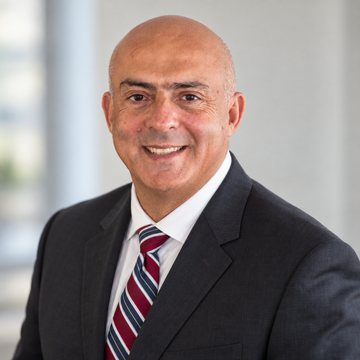
Jose Salloum Canadian Wealth Creation Centre Inc.
Read the guideWho this fits, and who it does not
It fits a household where one adult is not on a payroll and has never been properly valued, a family that wants the order of operations settled, or a business owner with retained earnings.
It does not fit someone looking for a short-term investment. A participating whole life contract is a long-horizon instrument and the early years are the expensive ones. It does not fit a family that has not yet sized its protection and built a reserve, because those come first and we will tell you so. And it does not fit anyone hoping to be told that a strategy will outperform a market, because that is not a claim this firm makes.
The first meeting
Thirty minutes, online, no cost and no obligation. The one thing worth doing beforehand takes ten minutes at a kitchen table: write down what your household would have to buy, and at roughly what cost, if the adult who is not on a payroll were unavailable for a year. Most couples have never had that conversation, and it is the whole of the first meeting.
Not ready to talk? Start with the book.
Read the first chapter of Infinite Financial Sovereignty®, Simplified, including the chapter on where this strategy does not fit. No meeting, no obligation.
Frequently asked questions
Is CWCC licensed in Alberta?
Yes. Canadian Wealth Creation Centre Inc. is licensed to place insurance in Alberta with the Alberta Insurance Council, and matches you with an advisor licensed in the province. The firm’s registration can be confirmed in the public registers of the AIC and the AMF.
My spouse does not earn an income. Can they be insured?
Yes. Insurers will underwrite a spouse without employment income, and the amount available is generally considered in relation to the coverage held on the earning spouse. It is an ordinary application rather than an unusual one, and the most common reason it never happens is simply that nobody raised it.
How do you put a number on unpaid work?
Estimate the annual cost of buying the services the household currently receives for free, add a realistic allowance for the surviving parent reducing their working hours, and run the total for the years until the youngest child is independent. It is a straightforward calculation and the result usually surprises the family that produces it.
Should we fund the RESP before we buy insurance?
No, and this is the most common ordering error we see. A cash reserve comes first, then protection covering both adults, then registered savings with the RESP high in that list because of the Canada Education Savings Grant. Funding education fully while the parents are uninsured optimizes for the one scenario in which the insurance was never needed.
Is an insurance policy a bank?
No. A participating whole life policy is an insurance contract governed by provincial insurance legislation. It is not a deposit account and it is not insured by CDIC. Protection comes from Assuris, within its published limits.
Do you provide investment advice?
A segregated fund contract is an insurance contract and can be put in place under an insurance licence. For mutual funds, ETFs and stocks held through a dealer we offer education only: CWCC is not registered with CIRO.
How are you paid?
Through commissions paid by insurers on products placed, once a policy is in force. Consulting fees may apply. Full disclosure appears on the Transparency and Compensation page.
Do I have to travel to meet you?
No. All meetings are held online, in English or French, and scheduling accounts for the two-hour time difference. The office is in Laval and no Alberta client needs to go there.
Are dividends guaranteed?
No. Dividends are declared annually by the insurer’s board according to how the participating account performed. What the contract records as guaranteed stays guaranteed; the dividend scale varies.
A thirty-minute discovery meeting
A first conversation establishes whether this fits. No illustration is prepared and nothing is arranged.
Often the answer is no, and you will hear it during the call rather than in a proposal afterwards.
The form is on the discovery meeting page and takes a minute. It arranges a conversation. It is not advice, and nothing is being sold here.
Listen to this page
Read aloud by your own browser. Nothing is sent anywhere.
About the author
Jose Salloum is a Financial Security Advisor (Conseiller en sécurité financière) licensed by the Autorité des marchés financiers in Quebec, by the Financial Services Regulatory Authority of Ontario, and by the Insurance Council of British Columbia. Licensed since 2001, he works with Canadian families, business owners and incorporated professionals.
He is the founder of Canadian Wealth Creation Centre Inc. (CWCC), registered with the AMF, and of its educational branch IBCFinancial.com. He holds the Infinite Banking Concepts® Authorized Practitioner certification from the Nelson Nash Institute, a private certification rather than a regulatory licence.
CWCC is not registered with CIRO and does not provide securities advice. This page is general education and not advice on any individual file.
Important disclosures
This page is education, not advice. The content is general information prepared by Canadian Wealth Creation Centre Inc. It does not take your circumstances into account and is not a recommendation to buy, hold or cancel any contract. CWCC is not registered with CIRO and does not provide securities advice. The firm places insurance in Quebec, Ontario, Alberta, British Columbia, Manitoba and New Brunswick; clients elsewhere are served by advisors licensed in their province.
Nothing here was written with your file in front of us. Read it to understand the subject, then judge it against your own situation, ideally with someone who is licensed where you live and who has seen your numbers.
This is not tax advice, and the tax treatment depends on your own circumstances. The tax treatment described depends on the contract remaining exempt under the Income Tax Regulations and on the reader’s individual circumstances. A withdrawal, a surrender or a policy loan may be a disposition under the Income Tax Act, and amounts above the adjusted cost basis may be taxable in the year they occur. Tax rules change. Canadian Wealth Creation Centre Inc. is licensed in life and health insurance. It is not an accounting practice, it does not prepare returns, and nothing on this site is tax advice or an opinion on any reader’s tax position. Anything a reader intends to rely on should be confirmed with a professional accountant and against the current published rule of the Canada Revenue Agency and, in Quebec, Revenu Québec.
The tax result is not automatic and it is not unconditional. It rests on the contract staying within the Canadian rules and on your own situation. Before you rely on any of it, talk to an accountant who has actually worked with these contracts.
Guarantees come from the insurer, not from the government. Guaranteed values in a life insurance contract are contractual promises of the issuing insurer and depend on that insurer’s financial strength and claims paying ability. Dividends on a participating contract are not guaranteed, are declared at the insurer’s discretion and can change. Policyholder protection in Canada is provided by Assuris within its published limits; deposit insurance does not apply to insurance contracts.
The guarantees written into a contract are real, and they are the insurer’s. The dividend is not a guarantee at all; it is what the insurer decides to declare each year. Know which numbers are which before you make a plan around them.
Illustrations and projections are not predictions. Any figures, examples or illustrated values are hypothetical, are shown to explain a mechanism, and are not a forecast of the performance of any contract. Actual values will differ and may be lower than those shown. Past dividend scales do not predict future scales.
An example is there to show how the parts move, not to tell you what you will get. Any real illustration you are shown should be read on its guaranteed columns first.
Borrowing against a contract carries its own risks. A policy loan or a loan secured by a contract accrues interest. If the balance and interest are not managed, the death benefit is reduced, and a contract that lapses with a loan outstanding can produce a taxable gain in that year. Third party lenders set their own terms and can change them.
A loan is a loan. Interest builds whether or not you pay it, and a contract that runs out of room while it is owed can cost you both the coverage and a tax bill. This is the part of the strategy that needs the most discipline.
Investment discussion is general and comparative. References to investment products, accounts or returns are for comparison and education. CWCC does not sell securities and is not registered with CIRO. Segregated funds are insurance contracts; their guarantees are the insurer’s and apply only at the dates and on the terms written in the contract. Returns are not guaranteed and capital can be lost.
When this site compares a contract with an investment, it is describing how each works, not telling you which to buy. Questions about securities belong with someone registered to answer them.