Financial services in Portage la Prairie
Before you act on anything about tax on this page
This practice is licensed in life and health insurance. It is not an accounting practice, it does not prepare returns, and nothing on this page is tax advice or an opinion on anybody’s tax position.
- Speak to an accountant before you act. Not after. If tax is any part of the reason a decision is being considered, a professional accountant who has seen the actual file is the person to decide it with, and this page is not a substitute for that conversation.
- The rules move. Tax rules, thresholds, rates, forms and deadlines change, most of them at least once a year, and a rule described here may have been amended since this page was built.
- The tax authority is the authority. For anything a reader intends to rely on, the Canada Revenue Agency and, in Quebec, Revenu Quebec publish the current rule themselves, free, and that is where it should be read.
- Nothing here is a calculation of anybody’s tax. This page describes how a rule is written. It does not work out what any reader will pay, recover or owe, because that depends on a whole return and on facts no page can see.
- No professional relationship is created by reading this. No reliance should be placed on it, and nothing in it is legal advice either.
In plain language: we are not accountants. Anything here that touches tax is general information, it changes, and it should be checked with an accountant and against the tax authority’s own page before anybody uses it for anything.
Here the asset is not the land. It is the contract, and the equipment that only makes sense while it lasts. CWCC works with Portage la Prairie growers, trades and business owners on wealth creation, insurance and capital strategy. The firm is licensed to place insurance in Manitoba with the Insurance Council of Manitoba and matches you with an advisor licensed in the province. Every meeting is held online.
Where to start
Portage sits where two national railways converge, which is why the processors built here. A town of a little over twenty thousand people holds a pea protein plant described as the world’s largest, a potato operation that has been expanded at a cost of hundreds of millions, and a McCain facility. Almost every local financial question runs back to one of them. Choose the situation that looks most like yours.
What you get
Seven areas, one team, and your accountant and lawyer in the conversation when the question belongs to them. On a contract growing file that is not a courtesy: it is the only way the work is done properly.
- Wealth creation. RRSP, TFSA, FHSA and RESP, in the order that suits an income that arrives after delivery rather than every second Friday.
- Capital strategy. Infinite Financial Sovereignty®, described below.
- Life insurance. Term, permanent and participating whole life, sized to debt that is already on the books.
- Living benefits. Critical illness, disability and long-term care, which matter most where the operator is also the workforce.
- Investment options. Segregated funds and education across the full menu available to Canadians.
- Group benefits. For your company, and a proper read of the plan you already have.
- Succession planning. Shares, equipment, the Capital Dividend Account, and the plan that keeps an operation intact.
The contract is the asset, and it is the one thing you cannot leave to anybody
A grower supplying a processor does not have the balance sheet of a grain farm. Contract production requires irrigation, storage that holds a crop in condition for months, handling equipment and often a specific variety programme. All of it is expensive, most of it is financed, and nearly all of it is single purpose.
That produces an exposure with a shape of its own. The equipment is worth a great deal while the contract renews and much less if it does not, and the lender who financed it knows that, which is why the credit was extended against the delivery agreement as much as against the machinery. A grain farm that loses a year still owns land. A contract operation that loses a contract owns a shed.
Three practical consequences follow, and each is a decision rather than a worry.
Debt should be protected in a way that does not depend on the operation continuing. Life insurance owned personally, or by the right entity, clears the borrowing at a death regardless of what the processor decides afterwards. Creditor insurance sold alongside the loan is not the same thing, because it typically pays the lender, declines with the balance, and disappears when the loan is refinanced elsewhere.
Disability is the larger risk and it is the one people skip. Contract production is operator intensive and time critical. A planting window and a harvest window do not move, and neither does a delivery schedule. An operator who cannot work for a season has a contract performance problem long before a personal income problem.
And succession here is not a will question. Land passes by a will; a supply agreement does not. Whether a processor continues with the next generation depends on the agreement and on the relationship, so the useful move is to read the contract for what it says about assignment and change of control, and to have the conversation with the processor years before it is forced. We do not draft that agreement. We size what the family would need if it ended badly, and we say so plainly when the number is larger than the premium the operation can carry.
Working at one of the plants, in a town where there are three
Plant work here pays a dependable wage with shift premiums, and it comes with a benefits plan that is usually decent. Two things are worth stating anyway.
The first is portability. Group coverage is generally tied to the job and ends when the employment does, and group life is usually a multiple of salary, which is a number about the employer’s cost rather than about your family. Owning a modest amount yourself, outside the plan, costs less than most people assume and is the only coverage that survives a change of employer.
The second is the town. When three plants dominate a local economy, a household’s job, its house price and the demand for whatever its partner does all move with the same handful of decisions. That is not a reason for alarm; Portage has been a processing town for a long time and the investment here has been growing rather than shrinking. It is a reason to hold liquidity rather than to hold more of the same exposure, and to be careful about a household where both earners work for the same employer.
Turnarounds, one truck, and income that arrives in bursts
Large plants generate two kinds of local business. There is construction and shutdown work, which arrives as a burst of very long weeks and then stops. And there is hauling, where an owner operator holds one truck, one loan and one set of customers.
Both share the same financial shape: strong gross income, high volatility, and everything resting on one person continuing to be able to work. For a household in that position the order is not negotiable. Disability coverage first, and read rather than assumed, because own occupation and any occupation are not the same policy and the difference decides whether a claim pays. Then term life, sized to the truck loan, the mortgage and the years the children are at home. Then a reserve that covers the quiet months rather than the busy ones.
One more note for the incorporated owner operator. A corporation is a useful structure and it does not, by itself, protect a household from a business obligation that was personally guaranteed. If you signed for the truck or the line of credit, the estate inherits that signature. The balance is a known number and covering it is inexpensive.
The strategy
In almost any financing arrangement, someone supplies the capital and someone else owns the structure it moves through. Most people occupy neither role. Infinite Financial Sovereignty® is about changing which side of that you are on.
It draws on the educational approach known as The Infinite Banking Concept®, set out by R. Nelson Nash in his book Becoming Your Own Banker®. CWCC is not affiliated with, sponsored by or endorsed by Infinite Banking Concepts, LLC.
In practice: capital accumulates inside a participating whole life contract issued by a Canadian life insurer, on a tax-deferred basis, and you reach it through a policy loan from the insurer rather than by applying to an outside lender.
Why it reads differently on a contract operation. An operation that borrows against a delivery agreement is borrowing against something it does not control. Capital reachable on terms already written into a contract with an insurer does not renew, does not get reviewed, and does not ask what the processor decided this year. That is the appeal. The condition attached to it is real: this is built over years and it cannot be assembled in the season it is needed.
Three points, without exception. A policy loan is a real loan, it accrues interest, and it reduces the death benefit while it remains outstanding. Dividends are never guaranteed and are declared annually by the insurer’s board. And this is insurance rather than a deposit account: protection comes from Assuris, within its published limits.
The full mechanics, including an entire chapter on where the strategy does not fit, are set out in Infinite Financial Sovereignty®, Simplified.
For the incorporated operation and the business owner
Many operations here are incorporated, which changes the questions rather than removing them. Shares become the thing that passes, the shareholders’ agreement becomes the document that decides what happens, and the Capital Dividend Account becomes available.
Where a corporation owns and is beneficiary of a policy, the death benefit generally credits the CDA by the excess of the proceeds over the adjusted cost basis, and that balance can be paid to shareholders as a capital dividend, generally free of tax subject to the rules in force. It depends entirely on how the policy is owned, and a policy held by the wrong entity can create a taxable shareholder benefit rather than the intended effect. It requires your accountant, your lawyer and us.
Shares are also capital property, and on death they are generally treated as disposed of at fair market value, so the accrued gain becomes taxable in the final return. The lifetime capital gains exemption may apply to qualified small business corporation shares or to qualified farm property, with conditions on every part of it. Your accountant is the authority on your own file.
One provincial note. Manitoba abolished its probate fee in 2020, so the fee-avoidance arguments that drive a great deal of planning elsewhere do not apply here. Probate still exists and still takes time. What remains is the honest reason to plan: liquidity on the day it is needed.
The cornerstone guide
Start here: the whole strategy in one page
What it is, how it works in Canada, what it costs, what it risks, how long it takes and who it does not suit.
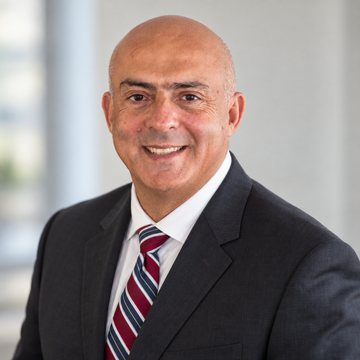
Jose Salloum Canadian Wealth Creation Centre Inc.
Read the guideWho this fits, and who it does not
It fits a contract operation carrying single purpose debt, an owner operator whose income depends entirely on being able to work, a plant household that has never owned coverage outside the employer plan, or an incorporated owner with retained earnings.
It does not fit someone looking for a short-term investment. A participating whole life contract is a long-horizon instrument and the early years are the expensive ones. It does not fit an operation that cannot sustain the premium in a poor year, and in contract growing that year will come. And it does not fit anyone hoping to be told that a strategy will outperform a market, because that is not a claim this firm makes.
The first meeting
Thirty minutes, online, no cost and no obligation. If the operation is the subject, the useful things to have nearby are a recent balance sheet, the current balance on any equipment or operating debt, and the delivery agreement itself. Almost nobody brings the third one, and it is the document the whole file turns on. The firm has one office, in Laval, and no Manitoba client needs to go to it.
Not ready to talk? Start with the book.
Read the first chapter of Infinite Financial Sovereignty®, Simplified, including the chapter on where this strategy does not fit. No meeting, no obligation.
Frequently asked questions
Is CWCC licensed in Manitoba?
Yes. Canadian Wealth Creation Centre Inc. is licensed to place insurance in Manitoba with the Insurance Council of Manitoba, and matches you with an advisor licensed in the province. The ICM publishes a licensee search and an agency search, and the firm’s registration can be confirmed there and in the public register of the AMF.
Why does contract growing change the insurance conversation?
Because the borrowing is secured against equipment whose value depends on a delivery agreement being renewed. Irrigation, storage and handling gear are largely single purpose. If the contract ends, the debt does not, so the protection has to be something that pays regardless of what the processor decides.
Is the creditor insurance my lender offered the same as life insurance?
No. Creditor insurance is generally owned by the lender, pays the lender, declines as the balance declines, and does not follow you if you refinance somewhere else. An individually owned policy pays the beneficiary you name, keeps its face amount, and is portable. The two are not interchangeable and the second is often less expensive than people expect.
Can I leave my processing contract to my children?
A will moves property; it does not move an agreement with a processor. Whether production continues with the next generation depends on the contract terms and on the relationship, so read what the agreement says about assignment and change of control, and have the conversation with the processor years before you need to. Your lawyer is the authority on the agreement itself.
I am an owner operator with one truck. What should I do first?
Disability coverage, read rather than assumed, because your entire income depends on being able to work and because own occupation and any occupation are different policies. Then term life sized to the truck loan, the mortgage and the years the children are at home. Then a reserve that carries the quiet months.
Is an insurance policy a bank?
No. A participating whole life policy is an insurance contract governed by provincial insurance legislation. It is not a deposit account and it is not insured by CDIC. Protection comes from Assuris, within its published limits.
Do you provide investment advice?
A segregated fund contract is an insurance contract and can be put in place under an insurance licence. For mutual funds, ETFs and stocks held through a dealer we offer education only: CWCC is not registered with CIRO.
How are you paid?
Through commissions paid by insurers on products placed, once a policy is in force. Consulting fees may apply. Full disclosure appears on the Transparency and Compensation page.
Are dividends guaranteed?
No. The dividend scale is set each year by the insurer’s board according to how the participating account performed. What the contract records as guaranteed stays guaranteed; the scale varies.
A thirty-minute discovery meeting
A first conversation establishes whether this fits. No illustration is prepared and nothing is arranged.
Often the answer is no, and you will hear it during the call rather than in a proposal afterwards.
The form is on the discovery meeting page and takes a minute. It arranges a conversation. It is not advice, and nothing is being sold here.
Listen to this page
Read aloud by your own browser. Nothing is sent anywhere.
About the author
Jose Salloum is a Financial Security Advisor (Conseiller en sécurité financière) licensed by the Autorité des marchés financiers in Quebec, by the Financial Services Regulatory Authority of Ontario, and by the Insurance Council of British Columbia. Licensed since 2001, he works with Canadian families, business owners and incorporated professionals.
He is the founder of Canadian Wealth Creation Centre Inc. (CWCC), registered with the AMF, and of its educational branch IBCFinancial.com. He holds the Infinite Banking Concepts® Authorized Practitioner certification from the Nelson Nash Institute, a private certification rather than a regulatory licence.
CWCC is not registered with CIRO and does not provide securities advice. This page is general education and not advice on any individual file.
Important disclosures
This page is education, not advice. The content is general information prepared by Canadian Wealth Creation Centre Inc. It does not take your circumstances into account and is not a recommendation to buy, hold or cancel any contract. CWCC is not registered with CIRO and does not provide securities advice. The firm places insurance in Quebec, Ontario, Alberta, British Columbia, Manitoba and New Brunswick; clients elsewhere are served by advisors licensed in their province.
Nothing here was written with your file in front of us. Read it to understand the subject, then judge it against your own situation, ideally with someone who is licensed where you live and who has seen your numbers.
This is not tax advice, and the tax treatment depends on your own circumstances. The tax treatment described depends on the contract remaining exempt under the Income Tax Regulations and on the reader’s individual circumstances. A withdrawal, a surrender or a policy loan may be a disposition under the Income Tax Act, and amounts above the adjusted cost basis may be taxable in the year they occur. Tax rules change. Canadian Wealth Creation Centre Inc. is licensed in life and health insurance. It is not an accounting practice, it does not prepare returns, and nothing on this site is tax advice or an opinion on any reader’s tax position. Anything a reader intends to rely on should be confirmed with a professional accountant and against the current published rule of the Canada Revenue Agency and, in Quebec, Revenu Québec.
The tax result is not automatic and it is not unconditional. It rests on the contract staying within the Canadian rules and on your own situation. Before you rely on any of it, talk to an accountant who has actually worked with these contracts.
Guarantees come from the insurer, not from the government. Guaranteed values in a life insurance contract are contractual promises of the issuing insurer and depend on that insurer’s financial strength and claims paying ability. Dividends on a participating contract are not guaranteed, are declared at the insurer’s discretion and can change. Policyholder protection in Canada is provided by Assuris within its published limits; deposit insurance does not apply to insurance contracts.
The guarantees written into a contract are real, and they are the insurer’s. The dividend is not a guarantee at all; it is what the insurer decides to declare each year. Know which numbers are which before you make a plan around them.
Illustrations and projections are not predictions. Any figures, examples or illustrated values are hypothetical, are shown to explain a mechanism, and are not a forecast of the performance of any contract. Actual values will differ and may be lower than those shown. Past dividend scales do not predict future scales.
An example is there to show how the parts move, not to tell you what you will get. Any real illustration you are shown should be read on its guaranteed columns first.
Borrowing against a contract carries its own risks. A policy loan or a loan secured by a contract accrues interest. If the balance and interest are not managed, the death benefit is reduced, and a contract that lapses with a loan outstanding can produce a taxable gain in that year. Third party lenders set their own terms and can change them.
A loan is a loan. Interest builds whether or not you pay it, and a contract that runs out of room while it is owed can cost you both the coverage and a tax bill. This is the part of the strategy that needs the most discipline.
Investment discussion is general and comparative. References to investment products, accounts or returns are for comparison and education. CWCC does not sell securities and is not registered with CIRO. Segregated funds are insurance contracts; their guarantees are the insurer’s and apply only at the dates and on the terms written in the contract. Returns are not guaranteed and capital can be lost.
When this site compares a contract with an investment, it is describing how each works, not telling you which to buy. Questions about securities belong with someone registered to answer them.