Life insurance in Saguenay
Before you act on anything about tax on this page
This practice is licensed in life and health insurance. It is not an accounting practice, it does not prepare returns, and nothing on this page is tax advice or an opinion on anybody’s tax position.
- Speak to an accountant before you act. Not after. If tax is any part of the reason a decision is being considered, a professional accountant who has seen the actual file is the person to decide it with, and this page is not a substitute for that conversation.
- The rules move. Tax rules, thresholds, rates, forms and deadlines change, most of them at least once a year, and a rule described here may have been amended since this page was built.
- The tax authority is the authority. For anything a reader intends to rely on, the Canada Revenue Agency and, in Quebec, Revenu Quebec publish the current rule themselves, free, and that is where it should be read.
- Nothing here is a calculation of anybody’s tax. This page describes how a rule is written. It does not work out what any reader will pay, recover or owe, because that depends on a whole return and on facts no page can see.
- No professional relationship is created by reading this. No reliance should be placed on it, and nothing in it is legal advice either.
In plain language: we are not accountants. Anything here that touches tax is general information, it changes, and it should be checked with an accountant and against the tax authority’s own page before anybody uses it for anything.
CWCC works with Saguenay families, industrial workers and business owners on life insurance, living benefits, succession planning and capital strategy: entirely online. The firm is registered with the Autorité des marchés financiers under number 602293, and Jose Salloum has been a Financial Security Advisor licensed by the AMF since 2001.
This page is general information and financial education. It is not personalized financial, insurance, investment, tax or legal advice, and reading it creates no professional-client relationship. Participating whole life insurance is an insurance product, not an investment; its primary purpose is the death benefit. Dividends are not guaranteed: they are declared annually by the insurer’s board of directors based on the performance of the participating account, and past performance does not indicate future results. Guarantees described are contractual obligations of the issuing insurer and depend on its financial strength; they are not government-backed. Insurance products are not deposits and are not insured by CDIC. Policyholder protection is provided by Assuris within its published limits. Policy loans accrue interest and reduce the death benefit and available cash value until repaid; under section 148 of the Income Tax Act a policy loan is a disposition and a taxable gain can arise where proceeds exceed the adjusted cost basis. Creditor protection varies by province and circumstance and is never absolute. Suitability can only be assessed through individual consultation. CWCC is a firm registered with the AMF (602293); its advisors earn commissions paid by insurers on products placed. CWCC is not registered with CIRO and provides no securities advice.
In plain language: this page describes what we do and how the pieces fit together. It cannot tell you what you should do, because we have not met. Dividends are not guaranteed. The insurer’s board decides, one year at a time. The guarantees come from the insurer, not the government, and a policy is not a deposit. When a client places a policy through us, the insurer pays us a commission: you should know that when you weigh anything we write. And when a question belongs to securities, we say so rather than pretend our licence stretches that far.
What makes Saguenay different
Saguenay is an industrial city in a region far from the major centres. Two features follow from that, and they change an assumption succession planning almost always makes without saying so.
A concentrated industrial economy. Aluminium, forestry and energy shape regional employment. These are skilled jobs, often unionised, with solid group plans, and a regional dependence on a small number of large employers.
Children who live elsewhere. This is the most consistent reality of Saguenay families. Adult children are frequently in Quebec City, Montreal or further away. The named liquidator often lives several hours’ drive from the house they will have to administer.
A thinner housing market than a metropolitan one. A residence may find a buyer quickly, or it may not. The number of potential buyers for any given property is structurally lower than in Laval or Longueuil.
A real distance from specialised professional services. Notaries and accountants are present; specialists in certain questions less so. That is precisely what an online meeting resolves.
The assumption nobody checks: that the house will sell
Almost all succession planning implicitly assumes a property can be turned into money when needed. In Saguenay that assumption deserves to be stated out loud.
The timing problem
At death, tax does not negotiate. The deemed disposition of property and the full taxation of a RRIF balance at the second spouse’s death both attach to the year of death. The final return has a deadline.
Selling a residence, by contrast, takes as long as it takes. In a thinner market that can be several months, sometimes longer, and the price obtained is not necessarily the one the family expected.
The estate therefore faces a dated bill and an asset whose conversion is not dated. It is a problem of timing, not of value. The wealth exists; it simply is not available at the moment the obligation falls due.
What families do instead
Three outcomes, in order of frequency. The heirs advance the money from their own resources, when they have them. The house is sold cheaply to free up cash quickly. Or the estate borrows, with the costs and delays that involves.
A death benefit paid to a named beneficiary generally arrives within weeks, outside the estate, without waiting for the liquidation or the sale. That is exactly the function at issue here: not creating wealth, but making it available in time.
The house one child wants to keep
When only one of the children wishes to keep the family home and the others live away, liquidity is needed to balance the shares. Without it, the only fair solution is a sale, which produces the outcome nobody wanted.
The liquidator who lives five hours away
In Quebec the person who administers an estate is the liquidator, with precise obligations: an inventory, publication in the Register of Personal and Movable Real Rights, and rendering an account. It is not a formality.
When the named liquidator lives in Montreal and the estate includes a house in Saguenay to maintain, insure, heat and sell, the burden becomes concrete: travel, management at a distance, decisions made without seeing. Many children discover this responsibility after the fact, without having been consulted.
Two things help, and neither of them is a product. The first is to ask the person before naming them, and to consider a liquidator who lives in the region. The second is a notarial will: a holograph will or one made before witnesses must be verified before it takes effect, which adds delay and cost to an administration already complicated by distance.
These decisions belong to a notary. We raise them because they cost little to settle in advance and a great deal to discover afterwards.
The group plan and regional concentration
The region’s large industrial employers generally offer good-quality pension plans and group insurance. That is a real advantage, with two limits worth knowing.
Coverage ends with employment. Employment-linked life insurance reduces or disappears at retirement, at the point when individual coverage costs the most, because insurability depends on age and health.
The disability definition matters more than the amount. For a skilled trade, an “own occupation” definition and an “any occupation” definition do not protect the same thing. It is written in the plan contract, and it is read before it is needed.
One regional fact compounds this: in an economy with few large employers, finding equivalent work after a layoff often means moving. That is not an insurable risk, but it is a reason to hold coverage that does not depend on the employer.
The Civil Code and designations
Beneficiary designations
In Quebec, registered accounts, RRSP, RRIF, TFSA, generally cannot carry a beneficiary designation within the plan itself. Those assets normally pass through the estate. Insurance contracts, a life policy, a segregated fund contract, can: the proceeds go directly to the named person, outside the estate.
When the liquidation risks being long because a house is slow to sell, that difference determines whether the surviving spouse receives money within weeks or only after everything else.
Common-law partners
In Quebec, common-law partners are not each other’s legal heirs, however long they have lived together, and are not subject to the family patrimony regime. A will and beneficiary designations become essential rather than optional.
Our seven service areas, seen from Saguenay
Life insurance
Term, permanent, participating whole life. Here the dominant function is supplying liquidity to an estate whose principal asset may take time to sell.
Living benefits
Critical illness, disability, long-term care. For a skilled worker, the contract’s definition of disability is the central question.
Group insurance
For a regional small-business employer, a retention tool in a market where the large industrial employers set the bar.
Wealth creation
RRSP, TFSA, FHSA, RESP. With a defined benefit plan, the pension adjustment sharply reduces RRSP room: the TFSA matters more.
Investment options
Segregated funds, mutual funds, ETFs, GICs. Education, and segregated fund contracts placed under our insurance licence. For securities held through a dealer: a CIRO-registered representative, which CWCC is not.
Succession planning
Notarial will, choice of liquidator, designations, the RRIF at the second death, a residence hard to share among dispersed heirs.
Financial sovereignty
The layer that connects the other six. See below.
The Infinite Financial Sovereignty® strategy in Saguenay
The strategy we call Infinite Financial Sovereignty® rests on the approach widely known as The Infinite Banking Concept®, originated by R. Nelson Nash. In any financing arrangement, someone supplies the capital and someone owns the structure it moves through.
The strategy uses a participating whole life insurance policy issued by a Canadian life insurer as the place capital accumulates on a tax-deferred basis, accessed through a policy loan rather than by applying to an outside lender.
Three clarifications, non-negotiable: a policy loan is a genuine loan issued by the insurer, it accrues interest, and it reduces the death benefit while outstanding. Dividends are never guaranteed. And this is not a bank: a policy is an insurance contract governed by provincial insurance legislation, it is not a deposit account, and protection comes from Assuris rather than CDIC.
Why here? For a reason that has nothing to do with return: availability. Wealth locked into a regional residence and a pension plan is solid but not mobile. A cash value reachable through a policy loan is money available without selling anything or asking a lender’s permission.
The strategy does require a long horizon and sustained premiums. For someone already retired, or on a modest income, the real need is protection and estate liquidity, not a capital structure. Chapter 8 of the book exists to help a reader conclude that it is not for them.
The book Infinite Financial Sovereignty®, Simplified sets out the full mechanics.
How this approach compares
An honest comparison does not declare a winner.
| Element | Conventional approach | Coordinated IFS™ approach |
|---|---|---|
| Tax due at death | Payable by the final return’s deadline | Death benefit generally paid within weeks, outside the estate |
| Converting the principal asset | Depends on the local market and the time to sell | Independent of the property market |
| Dispersed heirs | Equalization by selling | Equalization by liquidity, without forcing a sale |
| End of group coverage | Insurability to be re-established later, at higher cost | Individual coverage secured early, independent of employment |
| Growth | Market-dependent; not guaranteed | Contractual guaranteed values, plus dividends that are not guaranteed |
| Horizon required | Variable | Long: cash value is generally lower than premiums in the early years |
This table claims no superiority. A well-capitalised defined benefit plan and a paid-off house are real assets that none of this replaces. A participating policy is an insurance contract; comparing it to the market as though it were a fund would be a category error.
The cornerstone guide
Start here: the whole strategy in one page
What it is, how it works in Canada, what it costs, what it risks, how long it takes and who it does not suit.
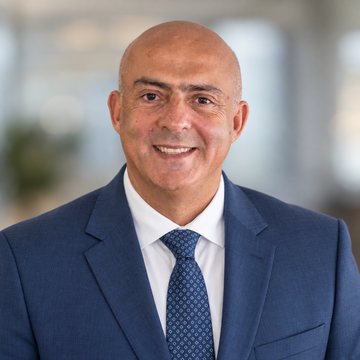
Jose Salloum Canadian Wealth Creation Centre Inc.
Read the guideWho this is for in Saguenay
- Homeowners whose children live elsewhere. A distant liquidator, a house hard to share, an uncertain time to sell.
- Industrial workers with a group plan. Coverage that ends with the job, a disability definition to verify.
- Households approaching retirement. The RRIF at the second death, a dated tax bill against an asset that is not liquid.
- Common-law partners. No automatic succession protection in Quebec.
- Regional small businesses and incorporated professionals. Key person, shareholders’ agreement, Capital Dividend Account.
And who it is not for: without an emergency fund, carrying high-interest debt, or with uncertain cash flow, those things come first. A permanent capital strategy generally does not suit someone already retired on a modest income.
What a first meeting covers
Thirty minutes, online, no products and no obligation.
Your situation
Income, group and pension plans, assets, where your children live, your will and the named liquidator.
What is missing
The real gaps. Here the answer often starts with the question of the liquidator and with the timing of tax at death.
An honest answer
If the first thing to do is see a notary, we will tell you.
How a meeting works
All of our meetings are held online, by video. In Saguenay that is not a compromise: it is the main advantage. Parents in the region and adult children in Quebec City, Montreal or elsewhere can join the same meeting, which is precisely the conversation that never otherwise happens. The firm’s office is in Laval, and nobody needs to travel there.
Check us out independently
No form in this section, nothing to book. Before trusting anyone with money the right instinct is to verify, and nothing here should discourage it.
The AMF register
Canadian Wealth Creation Centre Inc. is registered as a firm with the Autorité des marchés financiers under number 602293. Both a firm’s registration and an advisor’s certificate can be confirmed in the AMF’s public register.
The full profile
Licensing, designations and issuing bodies, with how to confirm each one. About Jose Salloum.
Or check for yourself
The Google links open a Google Canada search in a new tab. What appears there is Google’s ranking, not a recommendation from this site.
Frequently asked questions: Saguenay
My children live in Montreal. Who should be my liquidator?
That is a real question and it belongs to a notary. What we can say: the liquidator has precise obligations, inventory, publication in the register, rendering an account, and administering a house to maintain and sell from a distance adds a real burden. Ask the person before naming them, and consider a liquidator who lives in the region.
My house is my main asset. Is that a problem?
Not a problem of value, a problem of timing. Tax at death attaches to the year of death and the final return has a deadline; selling a residence takes as long as it takes, and in a thinner market that can be long. The estate faces a dated bill and an asset whose conversion is not dated.
My group plan is good. Do I need anything else?
Possibly, for two reasons. Employment-linked coverage reduces or disappears at retirement, when individual coverage costs the most. And for a skilled trade, the contract’s definition of disability matters more than the amount: “own occupation” and “any occupation” do not protect the same thing.
Can we meet together with my children who live far away?
Yes, and it is often the most useful meeting. All of our meetings are held by video: parents in Saguenay and adult children elsewhere in Quebec or Canada can take part in the same conversation.
Is an insurance policy a bank?
No. A participating whole life insurance policy is an insurance contract governed by provincial insurance legislation. It is not a bank, does not carry on banking, is not a deposit account and is not insured by CDIC. Protection comes from Assuris, within its published limits.
How are you paid?
Through commissions paid by insurers on products placed, once a policy is in force. Full disclosure appears on the Transparency and Compensation page.
A thirty-minute discovery meeting
A first conversation establishes whether this fits. No illustration is prepared and nothing is arranged.
Often the answer is no, and you will hear it during the call rather than in a proposal afterwards.
The form is on the discovery meeting page and takes a minute. It arranges a conversation. It is not advice, and nothing is being sold here.
Sources and references
- THE AMF REGISTERFirm 602293, Autorité des marchés financiers, lautorite.qc.ca
Listen to this page
Read aloud by your own browser. Nothing is sent anywhere.
About the author
Jose Salloum is a Financial Security Advisor (Conseiller en sécurité financière) licensed by the Autorité des marchés financiers in Quebec, by the Financial Services Regulatory Authority of Ontario, and by the Insurance Council of British Columbia. Licensed since 2001, he works with Canadian families, business owners and incorporated professionals.
He is the founder of Canadian Wealth Creation Centre Inc. (CWCC), registered with the AMF, and of its educational branch IBCFinancial.com. He holds the Infinite Banking Concepts® Authorized Practitioner certification from the Nelson Nash Institute, a private certification rather than a regulatory licence.
CWCC is not registered with CIRO and does not provide securities advice. This page is general education and not advice on any individual file.
Important disclosures
This page is education, not advice. The content is general information prepared by Canadian Wealth Creation Centre Inc. It does not take your circumstances into account and is not a recommendation to buy, hold or cancel any contract. CWCC is not registered with CIRO and does not provide securities advice. The firm places insurance in Quebec, Ontario, Alberta, British Columbia, Manitoba and New Brunswick; clients elsewhere are served by advisors licensed in their province.
Nothing here was written with your file in front of us. Read it to understand the subject, then judge it against your own situation, ideally with someone who is licensed where you live and who has seen your numbers.
This is not tax advice, and the tax treatment depends on your own circumstances. The tax treatment described depends on the contract remaining exempt under the Income Tax Regulations and on the reader’s individual circumstances. A withdrawal, a surrender or a policy loan may be a disposition under the Income Tax Act, and amounts above the adjusted cost basis may be taxable in the year they occur. Tax rules change. Canadian Wealth Creation Centre Inc. is licensed in life and health insurance. It is not an accounting practice, it does not prepare returns, and nothing on this site is tax advice or an opinion on any reader’s tax position. Anything a reader intends to rely on should be confirmed with a professional accountant and against the current published rule of the Canada Revenue Agency and, in Quebec, Revenu Québec.
The tax result is not automatic and it is not unconditional. It rests on the contract staying within the Canadian rules and on your own situation. Before you rely on any of it, talk to an accountant who has actually worked with these contracts.
Guarantees come from the insurer, not from the government. Guaranteed values in a life insurance contract are contractual promises of the issuing insurer and depend on that insurer’s financial strength and claims paying ability. Dividends on a participating contract are not guaranteed, are declared at the insurer’s discretion and can change. Policyholder protection in Canada is provided by Assuris within its published limits; deposit insurance does not apply to insurance contracts.
The guarantees written into a contract are real, and they are the insurer’s. The dividend is not a guarantee at all; it is what the insurer decides to declare each year. Know which numbers are which before you make a plan around them.
Illustrations and projections are not predictions. Any figures, examples or illustrated values are hypothetical, are shown to explain a mechanism, and are not a forecast of the performance of any contract. Actual values will differ and may be lower than those shown. Past dividend scales do not predict future scales.
An example is there to show how the parts move, not to tell you what you will get. Any real illustration you are shown should be read on its guaranteed columns first.
Borrowing against a contract carries its own risks. A policy loan or a loan secured by a contract accrues interest. If the balance and interest are not managed, the death benefit is reduced, and a contract that lapses with a loan outstanding can produce a taxable gain in that year. Third party lenders set their own terms and can change them.
A loan is a loan. Interest builds whether or not you pay it, and a contract that runs out of room while it is owed can cost you both the coverage and a tax bill. This is the part of the strategy that needs the most discipline.
Investment discussion is general and comparative. References to investment products, accounts or returns are for comparison and education. CWCC does not sell securities and is not registered with CIRO. Segregated funds are insurance contracts; their guarantees are the insurer’s and apply only at the dates and on the terms written in the contract. Returns are not guaranteed and capital can be lost.
When this site compares a contract with an investment, it is describing how each works, not telling you which to buy. Questions about securities belong with someone registered to answer them.