How to Pay Off Debt Faster: The Cash Flow Discipline Method
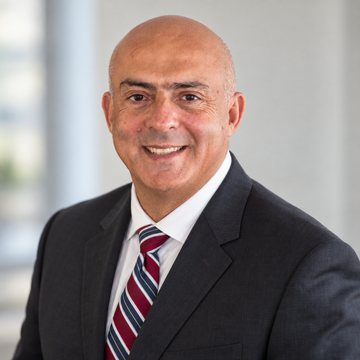
By Jose Salloum, Financial Security Advisor (Conseiller en sécurité financière) | June 2026
Key Takeaways
- The fastest way to pay off debt is to direct every available extra dollar to the highest-interest debt first: the avalanche method.
- The avalanche method prioritizes paying off debts with the highest interest rate first, regardless of balance size.
- Generally yes, if the debt carries a high interest rate.
- Consolidating high-interest debt into a home equity line of credit (HELOC) at a lower rate reduces the interest burden, but it also converts short-term unsecured debt into long-term secured debt backed by your home.
Debt has a compounding effect, but in the wrong direction. Every month that high-interest debt carries a balance, the interest charge grows the amount owed, making each subsequent month more expensive than the last. This is the same compounding principle that makes participating whole life insurance powerful over time, turned against you. Understanding how to break the cycle, and in what order to do it, is foundational to building wealth rather than merely servicing debt.
This article covers two proven debt repayment strategies, the cash flow discipline approach that accelerates either one, and the honest sequencing of when debt repayment fits alongside other financial priorities.
The Minimum Payment Trap
Before covering the strategies, it's worth understanding what making only the minimum payment actually does, because most people have never seen the calculation.
On a high-interest credit card, the minimum payment is typically calculated as a percentage of the outstanding balance or a flat dollar amount, whichever is higher. At common credit card interest rates, a large portion of that minimum payment covers interest, with very little reducing the principal. The result: a balance that barely shrinks month over month, even though payments are being made.
The minimum payment is designed by lenders to maximize the time it takes to repay a balance, which maximizes the total interest collected. It is not designed to help the borrower. Paying even modestly above the minimum can dramatically reduce both the repayment timeline and the total interest paid. This is the first principle of faster debt repayment: pay more than the minimum on every debt, every month, even if only a modest amount more.
The Two Strategies: Avalanche and Snowball
Once the commitment to paying above minimum is established, the question becomes: which debt do you focus the extra money on? There are two well-established answers.
The Avalanche Method
The avalanche method directs all extra funds to the debt with the highest interest rate first, while making only minimum payments on all other debts. When the highest-rate debt is eliminated, the amount that was being paid on it (the old minimum plus the extra) is redirected to the next highest rate debt. This continues until all debts are paid.
The mathematical result: the avalanche method minimizes total interest paid and produces the fastest debt-free date. It is the mathematically optimal approach. If the goal is to minimize the total cost of debt and get out of it as quickly as arithmetic allows, the avalanche is the answer.
The practical challenge: the highest-interest debt is often not the smallest balance, which means the first payoff victory can take a long time. For people who need early wins to maintain motivation, the avalanche can feel like a long run before any reward.
The Snowball Method
The snowball method directs extra funds to the smallest balance first, regardless of interest rate. When the smallest balance is eliminated, the full payment that was going to it rolls into the next smallest balance. The growing "snowball" of payments creates progressively larger payments on each successive debt.
The psychological result: the snowball produces earlier wins, smaller debts eliminated sooner, which many people find motivating enough to sustain the effort. Research on debt repayment behaviour suggests that the experience of eliminating a debt (regardless of its size) creates momentum that can sustain longer-term repayment programs.
The mathematical cost: the snowball typically results in paying more total interest than the avalanche, because low-balance, high-rate debts may sit at high rates for longer while low-rate, high-balance debts are paid down ahead of them.
Which to choose: the avalanche if you are analytically motivated and can sustain a plan without early wins; the snowball if you need the psychological momentum of visible progress. Either method, executed with discipline, is vastly superior to minimum payments. The best strategy is the one you will actually follow through on.
The Cash Flow Discipline Accelerant
Both strategies accelerate when more money is available to direct at debt. Cash flow discipline, the practice of systematically identifying and redirecting money toward the priority debt, is the accelerant that turns either strategy from adequate to powerful.
Discretionary spending review. A review of the past three months of spending typically reveals discretionary spending that is habitual rather than intentional: subscriptions not actively used, dining frequency, convenience purchases. Each dollar redirected from habitual discretionary spending to debt repayment reduces the balance and the interest that accrues on it. The compounding effect of consistently higher payments is significant even when individual amounts feel small.
Windfalls and irregular income. Tax refunds, bonuses, gifts, side income, and asset sales are windfalls that most people spend diffusely, on things that provide no lasting benefit. Directing a significant portion of any windfall to the priority debt produces a disproportionate impact: a single large payment reduces the principal base on which all subsequent interest is calculated. Even one lump-sum payment per year, directed to the highest-rate debt, can materially compress the repayment timeline.
The "found money" principle. When any recurring expense is reduced or eliminated, a cancelled subscription, a refinanced loan at a lower rate, a car paid off, the monthly amount that was going to it doesn't simply become available for spending. It gets redirected to the priority debt. This principle ensures that each financial improvement builds on the last rather than disappearing into expanded lifestyle spending.
Debt Consolidation: The HELOC Option
For homeowners with significant high-interest consumer debt, a home equity line of credit (HELOC) can offer a meaningfully lower interest rate than credit cards or unsecured personal loans. Consolidating high-rate debt into a HELOC reduces the monthly interest charge and, if maintained discipline, allows faster principal repayment with the same payment amount.
The critical risk: consolidating debt into a HELOC converts short-term unsecured debt into long-term debt secured by the home. If the behaviours that produced the original consumer debt do not change, the freed-up credit limits on the consolidated cards get used again, and the person ends up with HELOC debt plus new credit card debt. A worse position than before consolidation. Consolidation is a tool, not a solution. It works only when accompanied by a firm commitment not to re-accumulate the consolidated debt.
A separate consideration: HELOC interest may be partially deductible if the funds are used for income-earning purposes. Whether this applies to any specific situation is a tax determination that must be assessed by a qualified CPA, not assumed. The general principle exists in the Income Tax Act; its application depends on facts and circumstances.
The Honest Order of Operations
Debt repayment fits within a broader sequence of financial priorities. For most Canadians building toward financial sovereignty, the sequence looks like this:
Step 1: Emergency fund. Three to six months of essential expenses in a liquid, accessible account. This comes first because without it, everything else a household arranges is vulnerable to disruption. See The Emergency Fund: Why It Comes First.
Step 2: High-interest consumer debt. Any debt above a rate that significantly exceeds realistic long-term returns on savings or insurance strategies, credit cards, high-rate personal loans, is wealth-destroying and should be eliminated before committing resources to long-term wealth strategies. High-interest debt is the opposite of compound growth; it is compound erosion.
Step 3: Registered accounts and structured long-term strategies. Once high-interest debt is eliminated and an emergency fund exists, the foundation is secure. RRSP contributions, TFSA funding, and longer-horizon strategies, including participating whole life insurance as part of the Infinite Financial Sovereignty® framework, belong here. These strategies compound best when the financial foundation beneath them is stable.
The reason participating whole life insurance belongs after high-interest debt elimination is arithmetic: the interest rate on common credit card debt is far higher than the realistic dividend scale of any participating whole life policy. Building cash value in an insurance policy while simultaneously paying high-interest debt creates a net negative: the cost of the debt exceeds the benefit of the insurance accumulation. Eliminate the high-rate debt first. Then build the wealth strategy on a clean foundation.
Book a free, no-obligation Discovery Meeting →
This article is general financial education about debt repayment strategies. It does not constitute personalized advice. The appropriate debt repayment strategy for any individual depends on their specific debts, interest rates, income, and overall financial situation. Tax implications of debt consolidation strategies, including HELOC interest deductibility, must be assessed by a qualified CPA. CWCC and Jose Salloum are licensed insurance professionals; we are not registered financial planners or tax advisors.
In plain language: tax rules change, and how they land depends on your situation. Treat what you read here as background, and let your accountant confirm anything that touches your own return.
What consolidation actually does
Consolidation changes the shape of a debt. It does not change its size. On the day it completes, the same principal is still owed by the same household. What has changed is the number of agreements it sits under, the rate attached to it, the length of time it now has to run, and in many cases what secures it. Nothing has been repaid.
That is worth saying plainly, because a consolidation usually arrives with a lower monthly payment, and a lower payment reads to most people as progress. Often it is simply a longer term. The same amount, spread over more months at a lower rate, can still cost more in total interest than the shorter and dearer arrangement it replaced. The two figures to compare are the total cost to clear each way and the date each way finishes, not the payment.
The second change is security. Moving an unsecured balance onto an arrangement secured against a home converts an awkward problem into a housing problem. The lower rate is real and it is the reason the option exists. So is the consequence of falling behind, and it is a different consequence from the one that applied before.
The cornerstone guide
Start here: the whole strategy in one page
What it is, how it works in Canada, what it costs, what it risks, how long it takes and who it does not suit.
Jose Salloum Canadian Wealth Creation Centre Inc.
Read the guideThe payment that comes free, and where it has to go
Every accelerated repayment plan runs on one engine: the payment released when a balance finally reaches zero. That released amount is what makes the next balance fall faster than the last, and it is the whole reason the timeline compresses rather than simply continuing.
It is also the point where most plans quietly stop. The final payment goes through, the household feels the room appear, and nobody decides anything. Within two months the released amount has been absorbed into ordinary spending, invisibly and without a single deliberate choice. The remaining balances then take exactly as long as they would have taken with no plan at all.
The fix is unglamorous and it works. Redirect the released payment in the same week it comes free, before the household has had time to feel richer. Increase the automatic payment on the next balance by that exact amount, on the same day, in writing. The decision is easy while the money still feels spoken for and it is very hard a month later.
What has to change for it not to come back
Being clear of debt is a state that has to be held, not an event that happens once. Households that clear a balance and see it return within a year rarely failed at repayment. They repaid successfully and then met the same conditions that produced the balance the first time.
Three things generally have to be true. The gap has to close, meaning less leaves each month than arrives, measured rather than assumed. A reserve has to exist, because without one the next failed appliance goes on credit and there was never any other option. And the available credit has to be dealt with deliberately, whether that means reducing limits or simply agreeing in advance what a card is now for.
One measurement afterwards is worth more than any promise. Read the total owed on one day each month and write the figure down. It takes a few minutes, it cannot be argued with, and it tells a household which direction it is travelling in long before the feeling does.
Questions people ask
Does consolidating debt reduce what I owe?
No. It changes the shape of the debt: the number of agreements, the rate, the term and often what secures it. The principal is the same on the day it completes. Compare the total cost to clear and the finish date each way, rather than the monthly payment.
What should I do with the payment freed when a balance clears?
Move it onto the next balance the same week, automatically and in writing. That released payment is the engine of the whole plan. Left alone for a month it is absorbed into ordinary spending and the remaining balances slow back down.
Should repayment stop while I build a reserve?
Many households run both, because a plan with no reserve behind it puts the next unexpected cost straight back on credit. How the two are balanced depends on what is owed, at what cost, and how steady the income is.
Frequently Asked Questions
What is the fastest way to pay off debt?
Direct all extra funds to the highest-interest debt first (avalanche method), while making minimum payments on all others. This minimizes total interest and produces the fastest debt-free date mathematically. The snowball method (smallest balance first) is slightly less efficient mathematically but provides earlier wins that some people find motivating.
What is the minimum payment trap?
Making only the minimum payment on high-interest debt means most of each payment covers interest, with very little reducing principal. The balance barely shrinks. Even modestly above-minimum payments dramatically reduce total interest and repayment time.
Should I pay off debt before starting a whole life insurance strategy?
Generally yes, if the debt carries a high interest rate. The cost of high-rate consumer debt typically far exceeds what a participating whole life policy realistically accumulates: making simultaneous debt and insurance building mathematically inefficient. Eliminate high-rate debt first, then build on a clean foundation.
Is HELOC consolidation a good idea?
It can reduce interest costs, but it converts short-term debt into long-term secured debt. It works only with a firm commitment not to re-accumulate consolidated debt. Tax deductibility of HELOC interest is a CPA question, not an assumption.